Interview with DJ Sacred Beat aka Bionic

Sacred Beat aka Bionic — DJ Interview on Koh Phangan

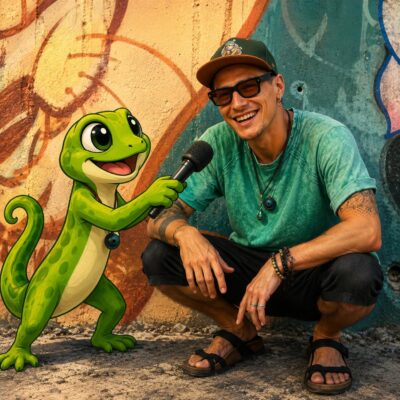
The Gecko looked behind the decks with Sacred Beat aka Bionic to talk about his first cassette recordings from radio broadcasts, rave underground, festival culture, the Bionic Buddha and Sacred Beat projects, and how Phangan became an island of music, dance and inner freedom for him.

🦎 Maxim, hello! Thank you for agreeing to share your story with PhanganLife. Let’s start from the very beginning: at what moment did music stop being just a hobby for you and become something bigger?
🦸‍♂️ Music stopped being just a hobby when I was around 14. I discovered Radio Station 106.8 and the world of electronic music, and started recording their broadcasts onto cassettes. Back then I was especially into Hardcore \ Drum`n`Bass and Psytrance shows. At night, I would hide under the blanket with a cassette player that could record from the «radio» — that’s basically how my first music collection appeared. I kept listening over and over to the best moments and tracks.

🦎 What was it about electronic music that caught you so strongly back then?
🦸‍♂️ Electronic music at that time felt like a revelation to me — something new, something that was almost nowhere else to be found. It was a way to touch some kind of «other» life. Probably the strongest impression on me was made by DJ Aphrodite. It was the year 2000, and his track «My Style From The Dark Side» was played to death by me. I started going to DnB and Gabber «Mayaki» — that was what gatherings of informal people near Mayakovskaya metro station were called. We stuck together because there was always a chance of getting properly «beaten up» by skinheads or wide-pants guys. Those were completely different times. It was real underground.

🦎 Do you remember your first independent rave? What was it like?
🦸‍♂️ My first independent rave was at the club «Estakada». I was 16, and the parties started at 9. The crowd was young and cool — guys in Grinders, acid-colored bombers and trendy pants with hanging chains, girls in high platform boots, lime-green leg warmers and bright prints on their T-shirts. Of course, all of this was done secretly from my parents. I would simply leave the house saying I was going for a «walk», and I had to be back before the metro closed. I calculated everything more or less perfectly — partied until 12:30, then ran to catch the last trolleybus and jumped into the metro right before it closed, arriving home around 2 and still getting in trouble from my parents and a family scandal — because there were no mobile phones back then, and I was allowed out «maximum until 12» 🙂

🦎 How did you start learning DJing, and what was your first setup for practicing?
🦸‍♂️ I learned to play on CDs — that happened a couple of years later, around 18. One crazy friend from the party scene had Pioneer CMX-3000s, I didn’t understand anything, but I became very interested in how this whole DJing thing worked…
Since turntables were expensive, and my parents had just given me a laptop, I bought an M-Audio sound card that split the signal into 2 channels, plus a used Pioneer mixer, and started practicing and recording my first mixes…

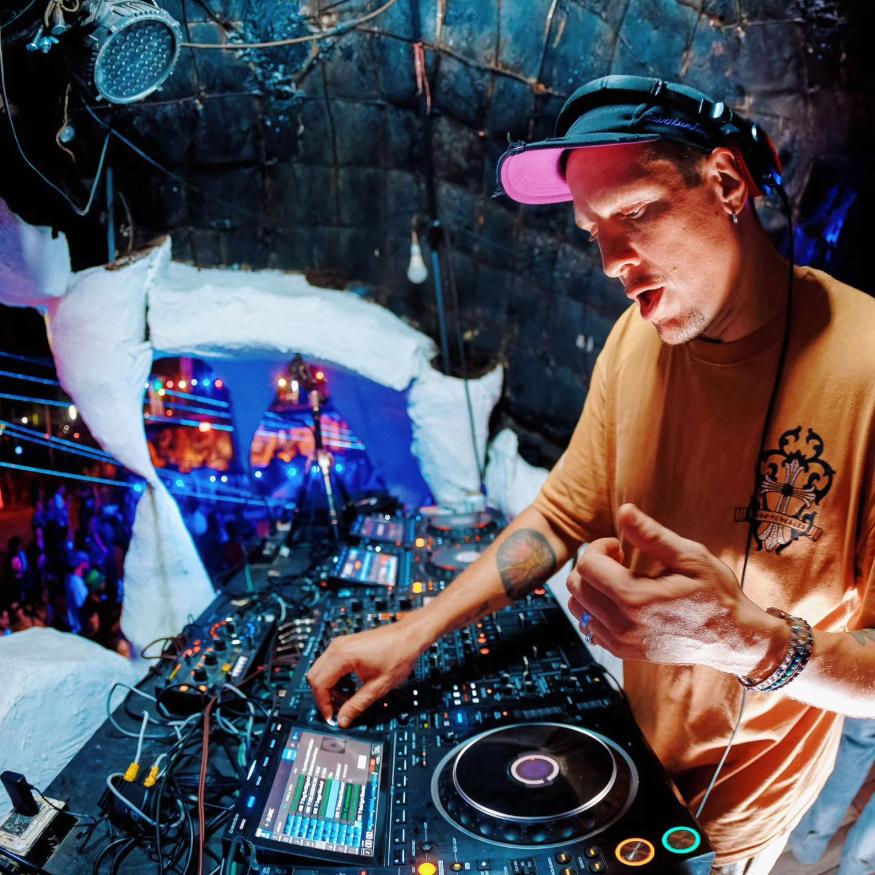
Sacred Beat DJ portrait on Koh Phangan

🦎 How did you feel behind the decks in the very beginning?
🦸‍♂️ I always felt confident behind the decks. Even back then I had taste, and people liked my music. My mixing wasn’t very good, but because the selection itself was always high-quality, people started inviting me to more and more different events.

🦎 Which parties and festivals marked the beginning of your journey into the scene?
🦸‍♂️ We started with our own private parties — for friends and acquaintances — renting cottages, small bars and clubs, and going to the first festivals — Systo\Trimurti\Trishula, where I met the guys from Mudra Music. It was a revelation — kind of not trance, but deep. Kind of not DnB, but at the same time broken, pumping and acidic.

🦎 Before Sacred Beat, you had the project Bionic Buddha. What kind of period was that, and what were you creating back then?
🦸‍♂️ Back then I had only one project, Bionic, or to be more precise — Bionic Buddha. I traveled a lot through India\Thailand, was into esotericism, and made mixes that thousands of people listened to and still listen to today — almost nobody has done anything similar even now *(you can google it — Bionic Buddha — Dzen \ Dao \ Buddha Tales \ Triedinstvo ) – it’s chillout with settings of ancient spiritual scriptures\texts, such as Tathagata, or Lao Tzu — Tao Te Ching, or texts by Nicholas Roerich. Even now I listen to it myself and think — what a good guy! He managed to express the inexpressible…

🦎 What did meeting Mudra Music give you, and what kind of sound brought you together?
🦸‍♂️ With the guys from Mudra Music, namely the frontman Stas Afro and my dear friend Zhenya Zarenok, we came together around a liquid-crystal sound. To understand what that is, you can visit the Mudra Music page on SoundCloud. The guys created their own locations at festivals, where the best and most unusual people always gathered — people who were looking for something new in sound.

🦎 How did the Sacred Beat project appear, and why did you need to separate your musical directions?
🦸‍♂️ Since I was and still am a versatile musical character, the abundance of mixes started turning into a mess. I loved techno stuff, trance, chill and DnB. But people — the listeners — were getting lost in all these styles, so at some point, around 10 years ago, I came up with the idea of making a mix called «Sacred Beat sessions» — with slower music, around (118-124) bpm, and at the same time I became a resident of the first Dudka Bar on Phangan — it was located on Middle Road. That was 2013, and I started coming to the island for the season..

🦎 Why did the name eventually become simply Sacred Beat?
🦸‍♂️ To avoid confusion for people between the festival sound and the Phangan sound, I simply removed «sessions» and it became Sacred Beat.

🦎 What is the main difference between Sacred Beat and Bionic?
🦸‍♂️ The main difference is that Sacred Beat is a straight beat, deep and rich — from 110 bpm to 130 🙂 And I kept Bionic for the more underground festival sound — from psydub and chill and experiments to trance and DnB… that’s how I separated my 2 musical perceptions, making the music more focused and accessible for its target audience.

🦎 Maxim, hello! Thank you for agreeing to share your story with PhanganLife. Let’s start from the very beginning: at what moment did music stop being just a hobby for you and become something bigger?
🦸‍♂️ Music stopped being just a hobby when I was around 14. I discovered Radio Station 106.8 and the world of electronic music, and started recording their broadcasts onto cassettes. Back then I was especially into Hardcore \ Drum`n`Bass and Psytrance shows. At night, I would hide under the blanket with a cassette player that could record from the «radio» — that’s basically how my first music collection appeared. I kept listening over and over to the best moments and tracks.

🦎 What was it about electronic music that caught you so strongly back then?
🦸‍♂️ Electronic music at that time felt like a revelation to me — something new, something that was almost nowhere else to be found. It was a way to touch some kind of «other» life. Probably the strongest impression on me was made by DJ Aphrodite. It was the year 2000, and his track «My Style From The Dark Side» was played to death by me. I started going to DnB and Gabber «Mayaki» — that was what gatherings of informal people near Mayakovskaya metro station were called. We stuck together because there was always a chance of getting properly «beaten up» by skinheads or wide-pants guys. Those were completely different times. It was real underground.

🦎 Do you remember your first independent rave? What was it like?
🦸‍♂️ My first independent rave was at the club «Estakada». I was 16, and the parties started at 9. The crowd was young and cool — guys in Grinders, acid-colored bombers and trendy pants with hanging chains, girls in high platform boots, lime-green leg warmers and bright prints on their T-shirts. Of course, all of this was done secretly from my parents. I would simply leave the house saying I was going for a «walk», and I had to be back before the metro closed. I calculated everything more or less perfectly — partied until 12:30, then ran to catch the last trolleybus and jumped into the metro right before it closed, arriving home around 2 and still getting in trouble from my parents and a family scandal — because there were no mobile phones back then, and I was allowed out «maximum until 12» 🙂

🦎 How did you start learning DJing, and what was your first setup for practicing?
🦸‍♂️ I learned to play on CDs — that happened a couple of years later, around 18. One crazy friend from the party scene had Pioneer CMX-3000s, I didn’t understand anything, but I became very interested in how this whole DJing thing worked…
Since turntables were expensive, and my parents had just given me a laptop, I bought an M-Audio sound card that split the signal into 2 channels, plus a used Pioneer mixer, and started practicing and recording my first mixes…

🦎 How did you feel behind the decks in the very beginning?
🦸‍♂️ I always felt confident behind the decks. Even back then I had taste, and people liked my music. My mixing wasn’t very good, but because the selection itself was always high-quality, people started inviting me to more and more different events.

🦎 Which parties and festivals marked the beginning of your journey into the scene?
🦸‍♂️ We started with our own private parties — for friends and acquaintances — renting cottages, small bars and clubs, and going to the first festivals — Systo\Trimurti\Trishula, where I met the guys from Mudra Music. It was a revelation — kind of not trance, but deep. Kind of not DnB, but at the same time broken, pumping and acidic.

🦎 Before Sacred Beat, you had the project Bionic Buddha. What kind of period was that, and what were you creating back then?
🦸‍♂️ Back then I had only one project, Bionic, or to be more precise — Bionic Buddha. I traveled a lot through India\Thailand, was into esotericism, and made mixes that thousands of people listened to and still listen to today — almost nobody has done anything similar even now *(you can google it — Bionic Buddha — Dzen \ Dao \ Buddha Tales \ Triedinstvo ) – it’s chillout with settings of ancient spiritual scriptures\texts, such as Tathagata, or Lao Tzu — Tao Te Ching, or texts by Nicholas Roerich. Even now I listen to it myself and think — what a good guy! He managed to express the inexpressible…

🦎 What did meeting Mudra Music give you, and what kind of sound brought you together?
🦸‍♂️ With the guys from Mudra Music, namely the frontman Stas Afro and my dear friend Zhenya Zarenok, we came together around a liquid-crystal sound. To understand what that is, you can visit the Mudra Music page on SoundCloud. The guys created their own locations at festivals, where the best and most unusual people always gathered — people who were looking for something new in sound.

🦎 How did the Sacred Beat project appear, and why did you need to separate your musical directions?
🦸‍♂️ Since I was and still am a versatile musical character, the abundance of mixes started turning into a mess. I loved techno stuff, trance, chill and DnB. But people — the listeners — were getting lost in all these styles, so at some point, around 10 years ago, I came up with the idea of making a mix called «Sacred Beat sessions» — with slower music, around (118-124) bpm, and at the same time I became a resident of the first Dudka Bar on Phangan — it was located on Middle Road. That was 2013, and I started coming to the island for the season..

🦎 Why did the name eventually become simply Sacred Beat?
🦸‍♂️ To avoid confusion for people between the festival sound and the Phangan sound, I simply removed «sessions» and it became Sacred Beat.

🦎 What is the main difference between Sacred Beat and Bionic?
🦸‍♂️ The main difference is that Sacred Beat is a straight beat, deep and rich — from 110 bpm to 130 🙂 And I kept Bionic for the more underground festival sound — from psydub and chill and experiments to trance and DnB… that’s how I separated my 2 musical perceptions, making the music more focused and accessible for its target audience.

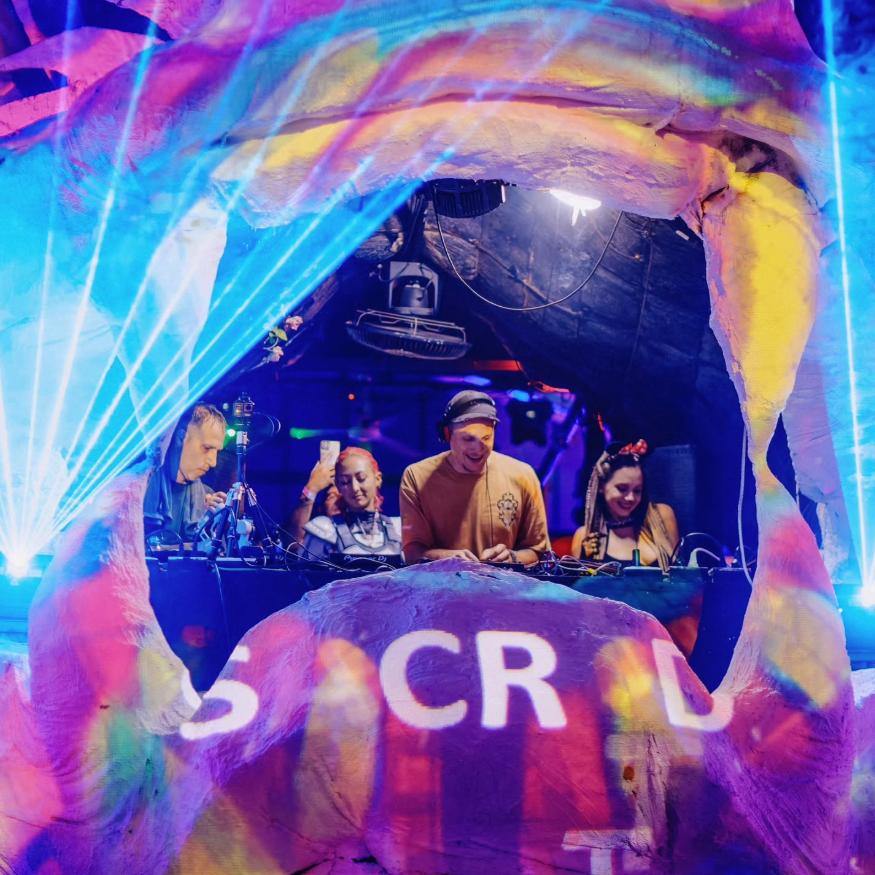
Sacred Beat DJ portrait on Koh Phangan

🦎 What does «Sacred Beat» mean to you?
🦸‍♂️ «Sacred Beat» is my music and my interpretation of why we gather on the dancefloor. To feel synchronization, unity, dance. I love giving something deeper through my music, even if it’s just a disco, and people feel that…

🦎 Do you prepare your sets in advance, or do you build them according to the state of the place and the crowd?
🦸‍♂️ I never play pre-planned or pre-recorded sets in any of my projects. I put together a playlist for the atmosphere of the place where I’m going to perform, and then, once I’m there, I look at the state of the crowd\sound and choose the keys to that particular space.

🦎 What is the most important thing for you in a set?
🦸‍♂️ For me, the most important thing in a set is contact with the crowd and energy exchange. They warm me up, I warm them up — and together we become one, in an ecstatic dance 🙂

🦎 How do you describe the style of your projects yourself?
🦸‍♂️ I would describe the styles of my projects like this: Sacred Beat — Space House | Bionic — Festival Underground

🦎 What is the story behind the track «Maugli»?
🦸‍♂️ The track «Maugli» uses samples from an old «Maugli» record released in the USSR. I came up with it while playing at WhyNam. It’s techno-midtempo, and I just felt that we, being surrounded by nature, are those very Mauglis 🙂

🦎 What does the track «What Is House» mean to you, and what does house mean as a culture?
🦸‍♂️ In What Is House, there is a sample from an old house track that says house gives people faith, unity and endless pleasure — and I believe in that and transmit it myself…

🦎 Tell us about «Bassok». Why is this track important to you?
🦸‍♂️ Bassok is actually one of my first tracks. I was learning to write music and, literally, trying to understand how to make the right Bass, because that is the foundation of the track 🙂 It has my vocal, saying in Russian: «I’m sitting at home and twisting this damn bassok»)))) Well, looks like it’s starting to work out 😀

🦎 How do you choose tracks for a specific set?
🦸‍♂️ I choose tracks for a set based on the space where they will be played. I more or less understand the location, the time\style, and the selection depends on that.

🦎 You are connected with both Goa and Phangan. What is the main difference between these two musical worlds for you?
🦸‍♂️ I would put it this way: Goa is the capital of trance music, and Phangan is the capital of house music. That is the main difference. Yes, there are different parties in both places, but what you might call the main course is different for each place.

🦎 How did Asia change your perception of parties and festival culture?
🦸‍♂️ Asia changed my perception of parties in general — because the season on Phangan, just like in Goa, is an endless festival. Only instead of dancefloors, there are different open-airs and clubs, and instead of tents, everyone has comfortable houses. So, in fact, it’s a festival stretched out over time.

🦎 How did your story with Koh Phangan begin?
🦸‍♂️ Koh Phangan is a magical island that changed my life and perception. When I first came to Eden Garden in 2012, I realized: wow, it would be amazing to play here someday, but the path was long and thorny 🙂

🦎 How did your first important set at Guys Bar happen?
🦸‍♂️ In 2017, thanks to Papa Joe and the Russian community Phangan Family, I managed to get a warm-up slot at Guys Bar. Shushukin was supposed to play after me, but he was about 2 hours late because he had never used boats\jeeps before, and that became my star moment =)) Everyone had gathered for Shushukin, but they listened to me and everyone liked it.

🦎 How did you become a resident at WhyNam, and what place does this venue hold in your story?
🦸‍♂️ In 2018, I was taken on as a resident at WhyNam, where I played every Saturday between Guys Bar and Eden until Covid, and I still play there quite often to this day…

🦎 How is the Phangan crowd different from an urban crowd?
🦸‍♂️ On Phangan, every set is special thanks to the crowd that comes specifically to listen to music! Unlike many city venues, it’s not easy to get here — and people who come here already have the intention to receive something unusual. And I, as they say, know how to cook that unusual thing 🙂

🦎 How do you see the development of the music scene on Phangan today?
🦸‍♂️ The island is developing and growing. Some places disappear, some become iconic — like Hollystone or Bambu — and it’s very nice to be part of such legendary venues and to share my musical vision with people from all over the world…

🦎 And finally, I want to ask: what state do you want to transmit to people through music, especially here on the island?
🦸‍♂️ There is an expression: «Do not trust gods who do not dance». Through my music, I transmit a state of gratitude, love and serenity, and the island setting completes it. People literally dance out their problems, their stress, and are reborn on the island’s dancefloors, becoming brighter and kinder. Isn’t that the most beautiful reward for serving music? 🙂

🦎 Thank you for your story — it is valuable that you shared it. I wish you inspiration, powerful dancefloors and even more magical nights on Phangan.
May your music continue to connect people, open hearts and remind us all: sometimes the best way to understand the island is simply to dance together with it. 🌴🎶

Sacred Beat DJ portrait on Koh Phangan

Sacred Beat aka Bionic

Sacred Beat (also known as Bionic / Maxim Karataev) is a DJ and producer based on Koh Phangan, Thailand, with roots connected to Mudra Music in Moscow.  His sound sits in the house spectrum — deep house and tech-house at the core, with touches of progressive house…
DJ discography

Share this koh Phangan info with your friends: